

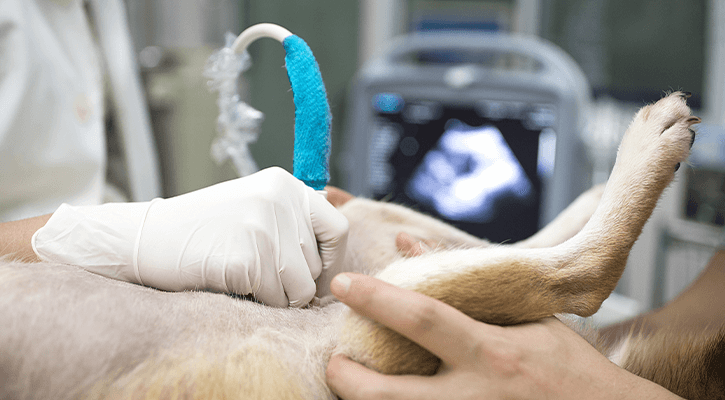
Ultrasounds are excellent diagnostic tools for dogs and cats because they are completely non-invasive, painless, and provide real-time moving images of internal organs and soft tissues. Unlike X-rays, which do not pass well through dense fluids, ultrasounds clearly distinguish between fluid, tissue, and tumors.
Soft Tissue & Organ Imaging: They provide detailed views of the liver, kidneys, spleen, bladder, and intestines. This helps vets detect liver disease, kidney stones, or intestinal inflammation.
Heart Monitoring: An ultrasound of the heart (echocardiogram) is the gold standard for diagnosing and monitoring heart disease.
Cancer & Mass Detection: They allow vets to identify tumors, cysts, and enlarged lymph nodes, as well as measure the precise size of abnormal growths.
Foreign Object Location: Ultrasounds can detect swallowed foreign bodies in the gastrointestinal tract that X-rays sometimes miss
Pregnancy Tracking: They are a safe, reliable way to confirm pregnancy, count fetuses, and monitor the development of puppies and kittens without exposing them to radiation.
Guided Biopsies: Vets can use ultrasounds in real-time to precisely guide needles for fluid sampling or tissue biopsies, often eliminating the need for invasive exploratory surgery.
Trauma Triage: They are highly effective in emergency situations for quickly spotting internal bleeding or free fluid in the abdomen.